
Types of Windscreen: The Variants That Change the Eurocode
UK glass shops: the types of windscreen on one model can mean several different eurocodes. Know the variants, run the VIN, and order eurocode + OE.
27 oktober 2026·8 min lezen
Quick takeaway
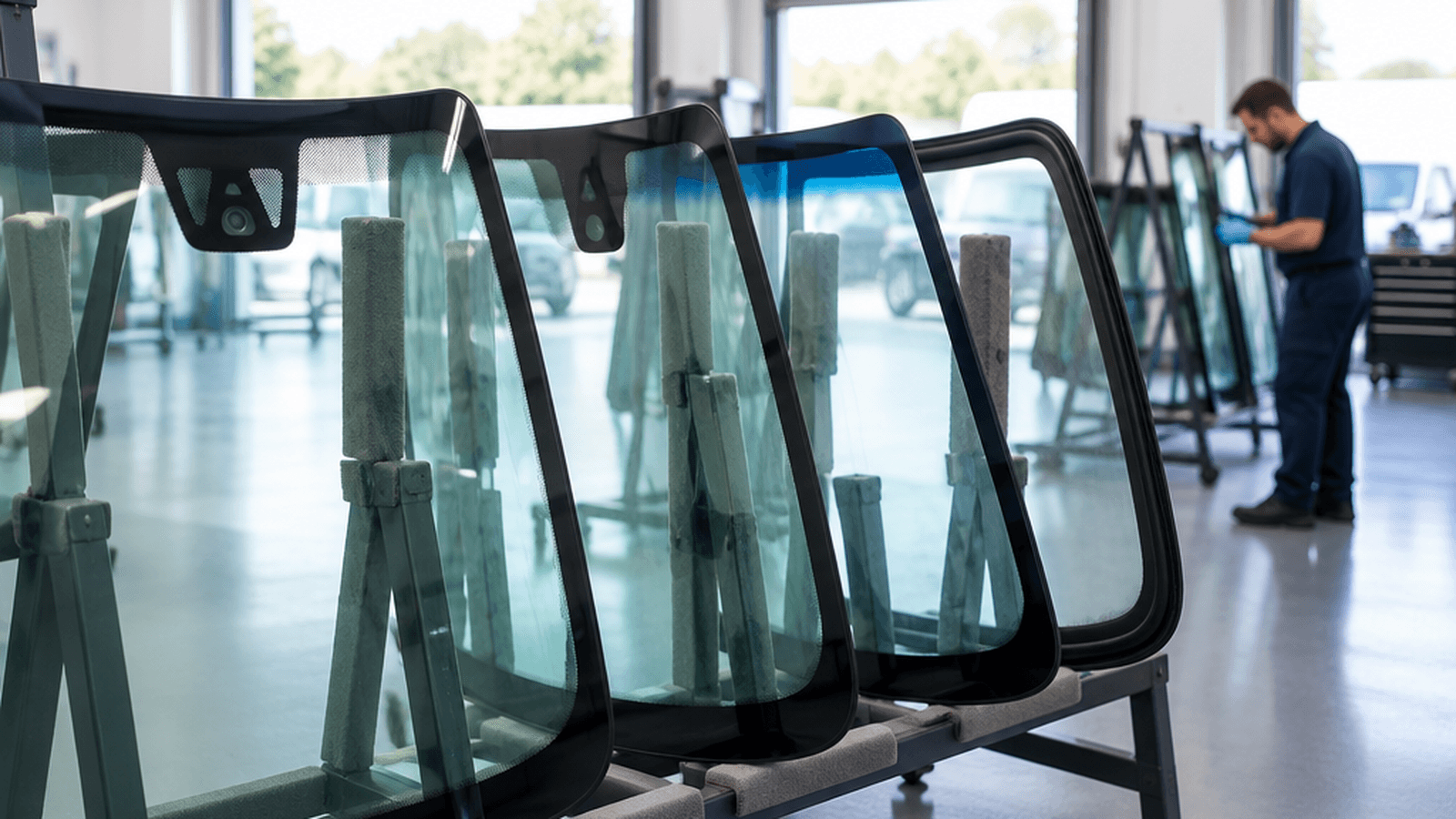
One car model can leave the factory with several types of windscreen: plain, heated, acoustic, solar control, HUD-ready, with or without a camera bracket or rain sensor, and with or without encapsulated trim. Each combination can be its own ARGIC eurocode and OE part number. Don't order by model and year. Run the VIN, put eurocode and OE on the PO, and check the delivered glass against the old screen before it comes out.
What “types of windscreen” means for a glass shop
Every road car windscreen in the UK is laminated safety glass: two layers of glass with a plastic interlayer between them. So for a shop, “type” isn't about laminated versus toughened. It's about the options built into the screen: the interlayer, coatings, heating, brackets, sensor pads, the frit pattern and the edge finish. Two screens for the same model can look almost identical on the rack and still be different parts, because one has an acoustic interlayer or a camera bracket and the other doesn't. That's why the useful question is not “what type of windscreen is it?” but “which exact windscreen did this vehicle leave the factory with?”
For how the code that captures those options is built, see ARGIC eurocode explained. For how OE and eurocode work together on one PO, read OE part number vs eurocode. This page is a map of the variants, so you know what to check before you order.
Why the type of windscreen gets ordered wrong
Most wrong-glass returns come from a description standing in for a part number. Three shortcuts cause most of them:
- Ordering by model and year — trim level, options and production changes split one model into several screens. Close is not the same part.
- Trusting the customer's description — “the one with the camera” or “the heated one” leaves out the other options on the same screen, and customers rarely know about acoustic interlayers or solar coatings.
- Looking at the car in a hurry — a quick glance at the mirror area can miss a sensor pad, a heated element or a HUD zone. Some options are only obvious once the old screen is out, which is too late.
Even a single option, like the bracket behind the mirror, can split a model into more than one code. The rain sensor windscreen guide shows how one small pad changes what you order. Multiply that by every option on the car, and guessing stops being a safe bet.
The main windscreen variants to confirm
These are the options that most often change the eurocode on the same model:
- Plain, tinted or shade-band glass — a clear or green-tinted screen, with or without a coloured band across the top. It's the simplest variant, but the band alone can be a separate code.
- Heated and acoustic glass — fine heating wires or a heated coating for de-icing, and acoustic interlayers that cut cabin noise. Either can sit on top of the other options. See heated and acoustic windscreen eurocode when the job card mentions either.
- Camera, sensor and ADAS brackets — a bracket for a forward camera, a radar or lidar window, or a mounting for the light and rain sensor. The bracket type and position decide whether calibration can work. Read ADAS windscreen identification for the camera-side checks.
A screen often carries several of these at once, for example a heated, acoustic screen with a camera bracket and a rain sensor. The eurocode describes the full combination, so treat each option as a reason to confirm the code, not as a detail to sort out on the day.
Shop path: VIN → eurocode + OE → check the glass → fit
Identification is the shop's job. Stock and delivery are the wholesaler's. Keep that split clear and the type of windscreen stops being a guess.
A clean path looks like this:
- Capture a clean 17-character VIN — from the V5C, the base of the windscreen or the door pillar. Watch the O/0 and I/1 traps. Use the VIN 17 characters checklist if photos or OCR are messy.
- Run a glass VIN lookup — get the orderable ARGIC eurocode and OE/OEM part number for the options actually fitted to that vehicle, not a list of every screen the model has ever had.
- Put both IDs on the PO — eurocode for aftermarket and wholesaler stock, OE when you buy through a dealer channel. Add any one-time clips, mouldings or sensor gel pads to the same order.
- Check the delivered glass, then fit — match the label and the marking in the corner to the eurocode, and compare brackets, sensor pads, heating and edge finish with the old screen before you cut it out.
Registration plate / VRM: customers usually give you the reg first. Plate-based identification is coming soon on AutoglassPortal. Until then, note the reg on the job card and use the VIN to identify the glass.
Scope: this guide covers windscreens only, not side, rear or roof glass, and is written for UK glass repair shops and windscreen companies ordering from wholesalers.
For the full VIN → part number workflow, see windscreen part number lookup by VIN.
More variants that catch shops out
Head-up display screens use a special interlayer so the projected image doesn't show double. Fitting a standard screen on a HUD car gives a ghosted display, so read HUD windscreen eurocode before you order for any car that might have one.
Solar control and infrared-reflective coatings are easy to miss, because the glass can look like any other tinted screen. On some cars they also affect toll tags and phone signal. See solar control windscreen for how to confirm the coating before the order goes in.
Common windscreen type mistakes
- Writing “heated screen” or “screen with camera” on the PO with no eurocode or OE.
- Ordering for the model year instead of the VIN and getting a screen that's missing one option the car needs.
- Spotting the camera bracket but missing the acoustic interlayer or heating, so the screen fits but isn't the same part.
- Forgetting that the edge finish is part of the type: an encapsulated screen is a different part from plain glass with a separate moulding. See encapsulated windscreen eurocode.
- Opening the delivery only when the car is in the bay, instead of checking brackets, pads and markings when the glass arrives.
- Not recording the eurocode and OE number on the job, so nobody can trace which windscreen was fitted if the customer comes back.
A repeatable workflow for the desk and the bay
Put identification before the phone call to the wholesaler, not after the glass arrives:
- Job booked → capture the VIN (note the reg on the card; the VIN still drives the glass ID).
- Office or van tablet → VIN lookup → eurocode + OE on the PO → clips, mouldings or gel pads added.
- Wholesaler confirms stock against those IDs → glass arrives labelled with the same codes.
- Bay check → compare options with the old screen → fit → ADAS calibration when required → codes saved on the job.
AutoglassPortal is built for that VIN → eurocode + OE step. See what AutoglassPortal is and the VIN to eurocode API if you want the same lookup inside your own job management or quoting software.
Brand pages when the VIN is already known
Once you have the VIN, brand hubs help with model context. Start from the windscreen brand index, including BMW, Volkswagen, Audi, Mercedes. Still order on eurocode and OE, not on the badge alone.
FAQ
What are the main types of windscreen?
Does each type of windscreen have a different eurocode?
How can I tell which type of windscreen a car has?
Can I fit a windscreen with fewer options than the original?
Is a toughened windscreen still a type I need to order?
Where do UK shops look up the windscreen eurocode from a VIN?
Confirm the exact type of windscreen before you order
Paste the VIN on AutoglassPortal, copy eurocode and OE onto the order, and get the right windscreen on the first delivery. Create a company account to look up windscreens for your shop.
VIN lookup · How VIN part lookup works · Sign up
Compare pricing or request API access for your existing shop software.