
Encapsulated Windscreen: Match the Moulding and Eurocode Before You Order
UK glass shops: an encapsulated windscreen is a different part from the same screen with loose trim. Run the VIN, order eurocode + OE, check the moulding.
23 октября 2026 г.·8 мин чтения
Quick takeaway
An encapsulated windscreen has its trim moulded onto the glass at the factory, so the moulding is part of the windscreen, not an extra you add on the day. Fully encapsulated, partly encapsulated and plain glass with a separate finisher can all be different ARGIC eurocodes on the same model. Run the VIN, put eurocode and OE on the PO, and compare the edge profile with the old screen before it comes out.
What an encapsulated windscreen is
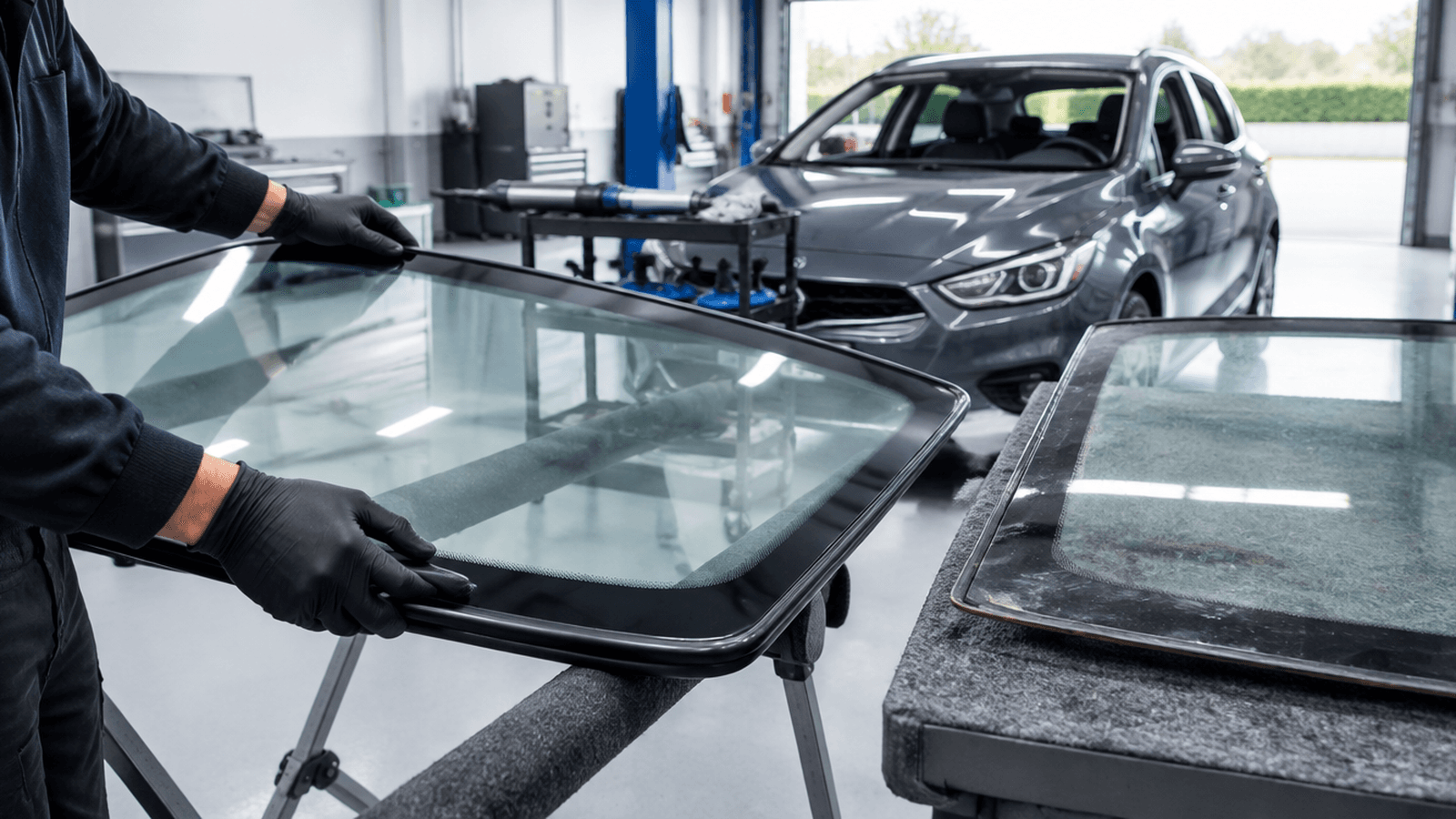
On an encapsulated windscreen, a polyurethane or PVC profile is moulded or extruded straight onto the edge of the glass at the glass factory. That profile can form the finish to the roof line and A-pillars, the lower cowl edge, built-in spacers that set the height of the screen in the aperture, and sometimes clips or studs. A non-encapsulated screen is plain glass with a black frit border, and the trim is a separate moulding, finisher or clip-on strip. You see encapsulation most often on vans, MPVs and some cars where the screen edge is part of the body styling. For the shop, the difference is simple: with encapsulation, the trim arrives on the glass. Without it, you need the right separate moulding as well.
For how the code itself is built, see ARGIC eurocode explained. For how OE and eurocode work together on one PO, read OE part number vs eurocode. This page is about ordering the right edge finish first time.
Why encapsulated screens get ordered wrong
The glass in the middle can look identical, so the edge is where mistakes hide. Three shortcuts cause most of the returns:
- Ordering by model and year — the same model can be listed with an encapsulated screen, a partly encapsulated one and plain glass with a separate moulding, sometimes depending on trim level or production date. Close is not the same part.
- Assuming the old trim will go back on — if the car came with an encapsulated screen, there is no separate moulding to save. If it came with plain glass and a loose finisher, an encapsulated screen may not sit correctly in that aperture at all.
- Reading “moulding” as optional — on many wholesaler lists, the encapsulated or moulding-fitted version is its own line with its own code, not an accessory you add to the order. Leave it off and you get the wrong screen.
A generic auto glass VIN decoder that only returns make, model and year will not tell you which edge finish the car left the factory with. Shops need a glass-level lookup that returns eurocode and OE before the PO goes out.
Edge and glass options to confirm
Before you confirm the order, check which of these the vehicle actually has:
- Full, partial or no encapsulation — a profile all the way round, a profile on the top and sides only, a lower profile only, or plain glass with separate trim. Each one can be a separate ARGIC eurocode, and the OE number may split them further. The moulding option often sits in the later characters of the eurocode, next to tint and accessory options, so read the full code from the lookup rather than decoding it by eye.
- Heated and acoustic glass — heated and acoustic laminate options come on top of the edge finish, so one model can have several encapsulated screens. See heated and acoustic windscreen eurocode when the job card mentions either.
- Camera and sensor brackets — the encapsulation and the built-in spacers set where the glass sits in the aperture, and the camera bracket is bonded to that glass. See ADAS windscreen identification for the camera-side checks.
Solar-control coatings, shade bands, rain sensors and HUD add more splits on the same model. A screen with the right encapsulation but the wrong sensor pack is still the wrong part. If the desk cannot confirm every option, run the VIN rather than ask the wholesaler to guess.
Shop path: VIN → eurocode + OE → check the edge → fit
Identification is the shop’s job. Stock and delivery are the wholesaler’s. Keep that split clear and encapsulated screens stop coming back.
A clean path looks like this:
- Capture a clean 17-character VIN — from the V5C, the base of the windscreen or the door pillar. Watch the O/0 and I/1 traps. Use the VIN 17 characters checklist if photos or OCR are messy.
- Run a glass VIN lookup — get the orderable ARGIC eurocode and OE/OEM part number for the edge finish, sensors and glass options fitted to that vehicle.
- Put both IDs on the PO — eurocode for aftermarket and wholesaler stock, OE when you buy through a dealer channel. If the car needs a separate moulding or clips rather than an encapsulated screen, add them to the same order so the fitter is not waiting on a trim part.
- Check the delivered glass, then fit — match the label and bug mark to the eurocode, stand the new screen next to the old one to compare the profile, spacers and any clips, check the moulded edge for damage from transit, then fit to your adhesive system’s instructions and calibrate ADAS if the vehicle needs it.
Registration plate / VRM: customers usually give you the reg first. Plate-based identification is coming soon on AutoglassPortal. Until then, the VIN is the reliable input for edge finish and option variants.
Scope: this guide covers windscreens only — not side, rear or roof glass — and is written for UK glass repair shops and windscreen companies, not for drivers. It is not a fitting procedure; always follow the vehicle maker’s instructions and your adhesive system.
For the full VIN → part number workflow, see windscreen part number lookup by VIN.
Why UK shops order encapsulated screens on the ARGIC eurocode
US catalogues lean on NAGS. UK and European wholesalers stock and invoice encapsulated and plain windscreens on ARGIC eurocodes, cross-referenced to OE numbers. Read NAGS vs eurocode if a US-style number has crept into your templates.
The eurocode is also the fastest way to settle a query at the counter. If the PO, the label and the bug all show the same code, the edge finish is right and you can move on to the car. If they do not, you have found the problem before the old screen is cut out. For how to order cleanly from the counter, see windscreen suppliers UK — same rule here: send the code, not a description.
Common encapsulated windscreen mistakes
- Writing “screen with trim” or “moulded screen” on the PO with no eurocode or OE.
- Ordering for the model year instead of the VIN and getting plain glass when the car needs an encapsulated screen, or the other way round.
- Not ordering the separate moulding or clips for a non-encapsulated screen, then leaving the car in the bay waiting for trim.
- Copying the code from an old aftermarket screen without reading the bug properly — see windscreen bug marking.
- Accepting a screen with a kinked or split encapsulation from transit instead of checking the edge when it is unpacked.
- Not recording the eurocode and OE number on the job, so nobody can trace which edge finish was fitted if the customer comes back.
A repeatable workflow for the desk and the bay
Put identification before the phone call, not after the glass arrives:
- Job booked → capture the VIN (note the reg on the card; the VIN still drives the glass ID).
- Office or van tablet → VIN lookup → eurocode + OE on the PO → separate moulding or clips added if the screen is not encapsulated.
- Wholesaler confirms stock against those IDs → glass arrives labelled with the same codes.
- Bay check → compare edge profile, spacers and clips with the old screen → fit → ADAS calibration when required → save eurocode and OE to the job → hand back.
AutoglassPortal is built for that VIN → eurocode + OE step. See what AutoglassPortal is and the VIN to eurocode API if you want the same lookup inside your own job management or quoting software.
Brand pages when the VIN is already known
Once you have the VIN, brand hubs help with model context — start from the windscreen brand index, including BMW, Volkswagen, Audi, Mercedes. Still order on eurocode and OE, not on the badge alone.
FAQ
What does encapsulated mean on a windscreen?
Is an encapsulated windscreen a different part number from the plain version?
Can I fit a non-encapsulated screen where the car had an encapsulated one?
Do I need to order a separate moulding with an encapsulated windscreen?
How can I tell an encapsulated screen apart before removal?
Where do UK shops look up the encapsulated windscreen eurocode from a VIN?
Confirm the encapsulated windscreen eurocode before you order
Paste the VIN on AutoglassPortal, copy eurocode and OE onto the order, and get the right edge finish on the first delivery. Create a company account to look up windscreens for your shop.
VIN lookup · How VIN part lookup works · Sign up
Compare pricing or request API access for your existing shop software.